Solar for warehouses and factories: cutting the bill and the generator

Tony Lopes
Short answer: Warehouses and factories are among the best buildings in South Africa for solar: big roofs, and most of the power used during working hours when panels produce most. A well-sized system cuts the energy part of the bill directly, can reduce generator running hours, and qualifies for a 100% first-year tax deduction under Section 12B for systems up to 1 MW. Start with 12 months of bills and your meter data, and get the roof checked before anything else.
Prices and rules checked October 2026.
Load shedding is no longer what drives business solar. The bill is. Eskom's direct tariffs went up by an average of 8.76% on 1 April 2026, municipal tariffs by about 9% from 1 July, and NERSA has approved another 8.83% for April 2027. For a business running a generator through outages and peaks, diesel has climbed even faster: inland wholesale 50ppm diesel was almost R32 a litre in October 2026, up from about R19 a year earlier.
This guide explains why commercial buildings suit solar, what it can and can't cut on a business tariff, the roof and paperwork questions to settle early, and how to brief installers so you get quotes you can compare.
Why do warehouses and factories suit solar so well?
- The working day matches the solar day. Lighting, conveyors, compressors, cooling, offices and machinery mostly run between morning and late afternoon, when panels produce most. Little of the solar power goes to waste.
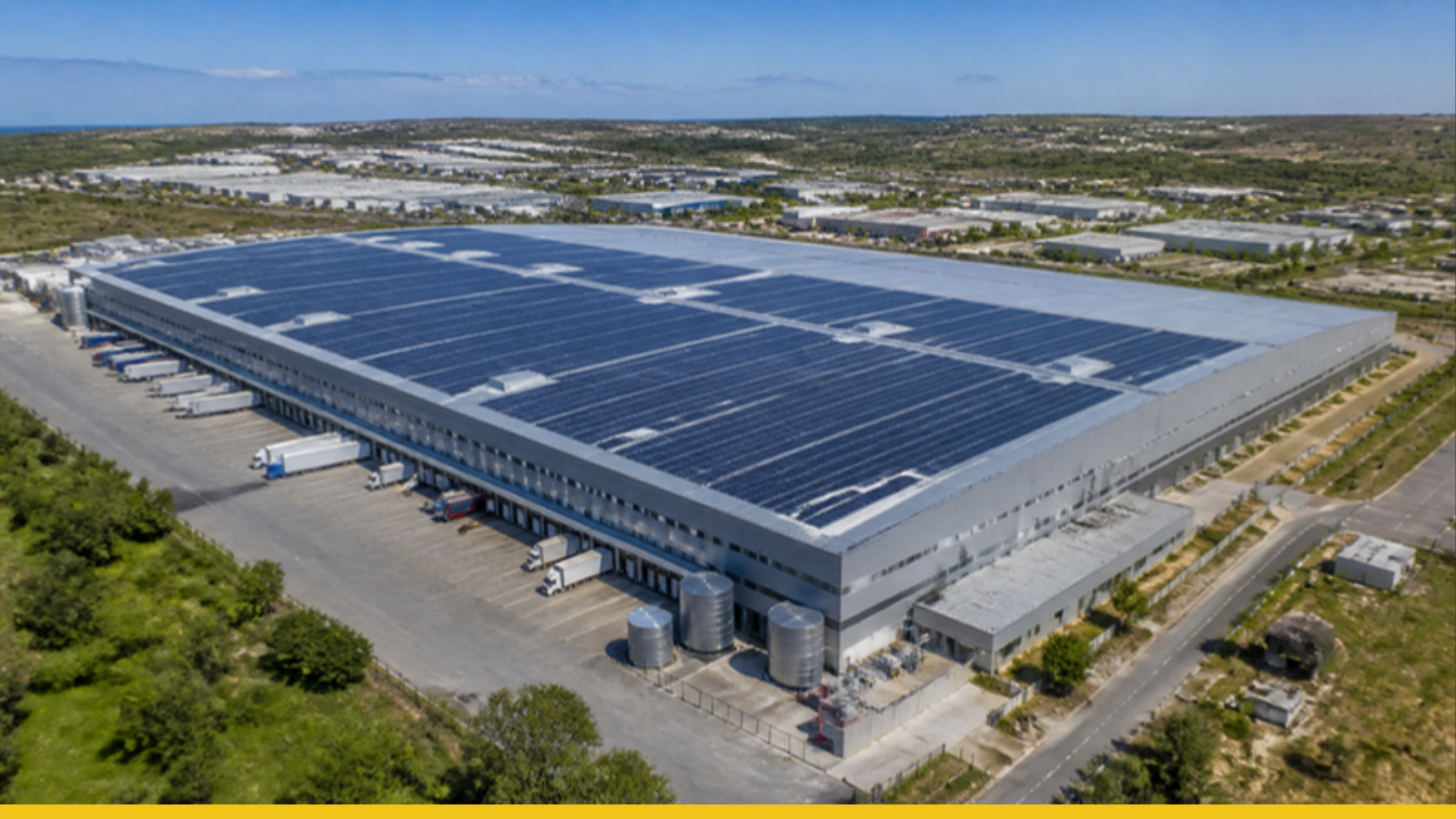
- Large, open roofs. A warehouse roof often has room for far more panels than a house, at a lower cost per panel installed.
- Commercial tariffs are high. Every unit of solar power used on site is a unit not bought at business rates.
- Tax treatment. A business can usually write the system off quickly against taxable income (see below). A homeowner can't.
What can solar cut on a business electricity bill?
Business tariffs are made of several charges, and solar affects them differently. Knowing which is which stops anyone overselling the savings.
| Part of the bill | Does solar reduce it? |
|---|---|
| Energy charges (per kWh) | Yes, directly. Usually the biggest saving, especially where daytime units are charged at higher time-of-use rates. |
| Demand charges (per kVA of peak demand) | Sometimes. If your peak happens on a cloudy day or after sunset, solar alone won't lower it. Batteries or load management can. |
| Fixed, network and service charges | No. These are paid regardless of how many units you buy. |
| Generator fuel | Yes, often sharply, when the system is designed to carry daytime loads and start the generator only as a last resort. |
An honest proposal should show which of these charges it expects to reduce, and by how much, using your own bills.
Is my roof suitable?
Settle this first, because it can change the whole project.
- Structure: A larger system adds real weight and wind load. Expect a structural engineer to check the roof and sign off the mounting design.
- Age and condition: If the roof sheeting will need replacing in the next few years, do it before the panels go up. Removing and refitting panels later is expensive.
- Asbestos roofs: Panels should not be fixed to asbestos sheeting. Ask about ground mounts or carport structures instead.
- Lease terms: If you rent the building, you'll need the landlord's written consent, and an agreement about what happens to the system if you move.
How big should the system be?
Size the system to what the building uses in daylight, not to the size of the roof. Power you can't use on site is either wasted or, where your municipality allows it, exported at a credit that is usually well below what you pay for power. A good installer will want your meter's interval data (half-hourly or hourly readings) to see exactly when the building uses power.
Batteries are optional for many businesses. They make sense when night or early-morning loads are significant, when demand charges are high, or when production can't stop during an outage.
How does Section 12B work for solar?
Section 12B of the Income Tax Act lets a business deduct 100% of the cost of qualifying solar PV in the year it is brought into use, for systems up to 1 MW. Larger systems are written off over three years. For a company paying 27% tax, that brings forward a tax saving worth roughly a quarter of the system's cost. The enhanced 125% deduction ended on 28 February 2025 and was not renewed.
The system must be owned by the business and used in its trade. Speak to your accountant about timing, because the deduction falls in the tax year the system is commissioned.
Buy, finance or rent?
- Buy with cash: Lowest cost over the life of the system, and you get the Section 12B deduction.
- Asset finance or a loan: You own the system and can claim the deduction, while repayments are often covered by the savings.
- Rental or a power purchase agreement (PPA): A provider owns and maintains the system and you pay a monthly fee or a rate per unit. No capital outlay, but the provider, not you, gets the tax benefit.
What should I send installers?
- Twelve months of electricity bills, showing the tariff and any demand charges.
- Meter interval data, if your supplier or meter provides it.
- Operating hours and shifts, including weekends and seasonal peaks.
- Generator details and fuel use.
- Roof drawings or photos, roof age, and the size of the main incoming supply.
- The loads that must keep running during an outage.
Send the same pack to every installer you approach so the quotes are comparable. Our guide to what a solar quote should contain shows what to check when they come back.
What does it look like in practice?
A campus client of Crown Technologies, a CleanVolts Approved FoxESS installer in Roodepoort, cut its diesel generator costs by almost 60% after Crown sized a FoxESS system around how the campus actually uses power through the week. You can see the case study on Crown's profile.
What paperwork does a commercial system need?
- A Certificate of Compliance (CoC) issued by a registered person working for a registered electrical contractor.
- Approval from your municipality or Eskom before the system is connected to the grid.
- Registration with NERSA for larger grid-connected systems.
- Structural sign-off for the roof or ground-mount design, and notification to your insurer.
Frequently Asked Questions
How long does commercial solar take to pay for itself?
It depends on your tariff, how much of the solar power you use on site and whether you claim Section 12B. Systems sized to daytime use on a business tariff often pay back within several years. Ask each installer to show the calculation using your own bills.
Can we keep running during an outage?
Only if the system includes batteries or is set up to work with your generator. A grid-tied system without batteries switches off when the grid goes down, for safety.
We rent our premises. Can we still go solar?
Yes, with the landlord's written consent. Agree up front who owns the system, who insures it, and what happens at the end of the lease.
Where We Fit In
CleanVolts matches businesses with CleanVolts Approved commercial installers in every province. We help you put together the information installers need, and the installer you choose designs, installs and signs off the system under their own registration. It costs you nothing to use us.
Sources: Eskom on the 2026/27 tariff decision; Engineering News on the 2027/28 increase; BusinessTech on October 2026 fuel prices; Section 12B overview; SAPVIA on the end of the enhanced deduction.