Solar for cold rooms, packhouses and dairies

Tony Lopes
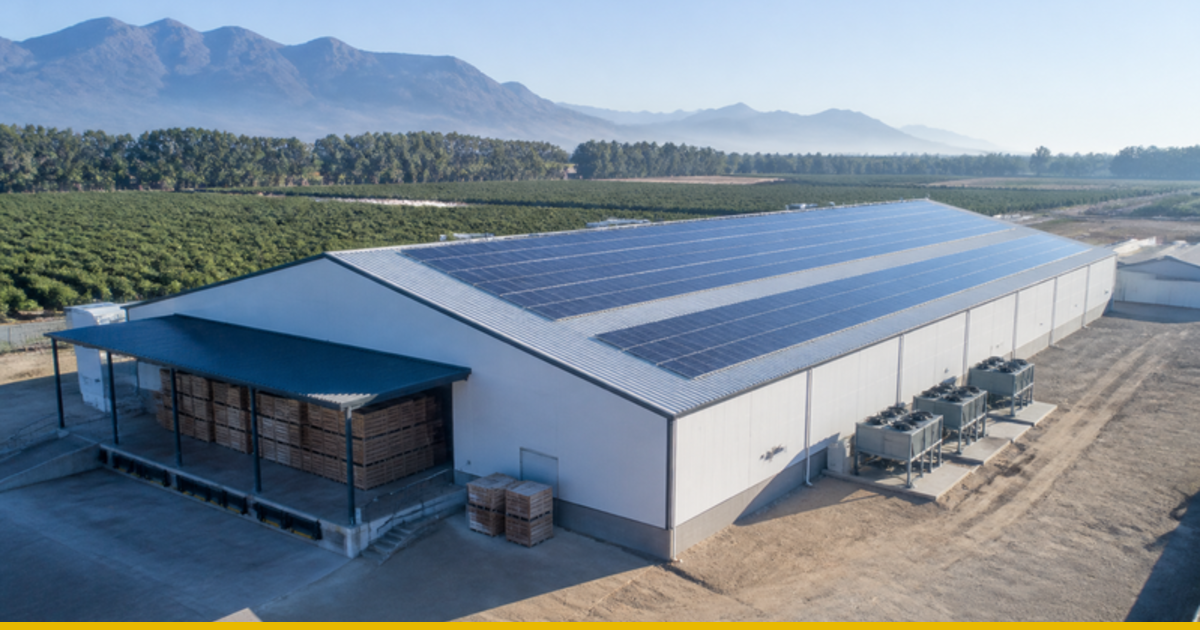
Short answer: Yes, for most of the daytime load. Packhouses and the morning-to-afternoon side of a dairy run in daylight, and cold rooms can do their hardest cooling during the day so they need less power at night. Size the system from your load profile, move every load you can into sunshine hours, and add batteries only for the night load that can't move.
Last updated November 2026.
Refrigeration, milk cooling and packing lines are some of the biggest electricity users on a farm, and some of the most expensive to back up with diesel. They're also some of the best matches for solar, because so much of the work happens while the sun is up. This guide covers how to size solar for cooling and processing loads, how to shift those loads into daylight, and where a battery is worth adding. For the bigger picture, see our main guide to solar for farms.
Can a farm run cold rooms, packhouses or a dairy on solar?
Each load suits solar differently:
| Load | When it runs | How well it suits solar |
|---|---|---|
| Packhouse lines, sorting, grading | Day shift | Very well. Almost all the load falls in daylight. |
| Cold rooms and pre-coolers | Day and night, heaviest on hot afternoons and when fresh product comes in | Well, especially if cooling is pushed into the day |
| Milking parlour (vacuum pumps, lights) | Early morning and afternoon | Afternoon milking suits well. Early morning milking often happens before strong sun. |
| Milk cooling (bulk tank) | During and after each milking | Mixed. Ice-bank or pre-cooling systems can store cold made during the day. |
| Hot water for cleaning | After milking | Well, if water is heated by day and stored in insulated tanks |
How do you move cooling loads into daylight?
The cheapest battery on a farm is often cold itself. A well-insulated cold room, an ice bank or a tank of chilled water stores cooling made with daytime solar and releases it overnight.
| Measure | What it does | Check first |
|---|---|---|
| Pre-cool in the afternoon | Run the room at the cold end of its safe range during sunny hours, so compressors run less overnight | The product's safe temperature band. Some fruit is damaged by going too cold. |
| Load product in by day | Pulls the heat out of fresh product while solar is strong | Harvest and delivery times |
| Ice-bank or chilled-water storage | Makes ice or chilled water by day for milk cooling at night or early morning | Whether your cooling system supports it, or can be adapted |
| Plate cooler using borehole water | Pre-cools milk before it reaches the bulk tank, cutting tank cooling | Water supply and temperature |
| Heat wash water by day | Heats and stores cleaning water using solar or a heat pump in the middle of the day | Tank size and insulation |
| Fix the building | Door seals, strip curtains, insulation and shading cut the cooling needed at all hours | Usually the cheapest saving of all |
How do you size solar for these loads?
- Get the load profile. Twelve months of bills, plus half-hourly meter data if your supply has it. If not, an installer can log the main loads for a few weeks.
- Separate day and night use. Note how much happens between about 08:00 and 16:00, and how this changes between harvest or peak milk and quiet months.
- Size panels to the daytime load. Each kWp produces about 4.5 kWh on an average day in much of South Africa's interior. Sizing to the busy season can mean wasted power in quiet months, unless you can export it or use it elsewhere on the farm.
- Size the inverter for the start-up surge. Compressors and vacuum pumps draw several times their running power for a moment when they start. Soft starters and variable speed drives help.
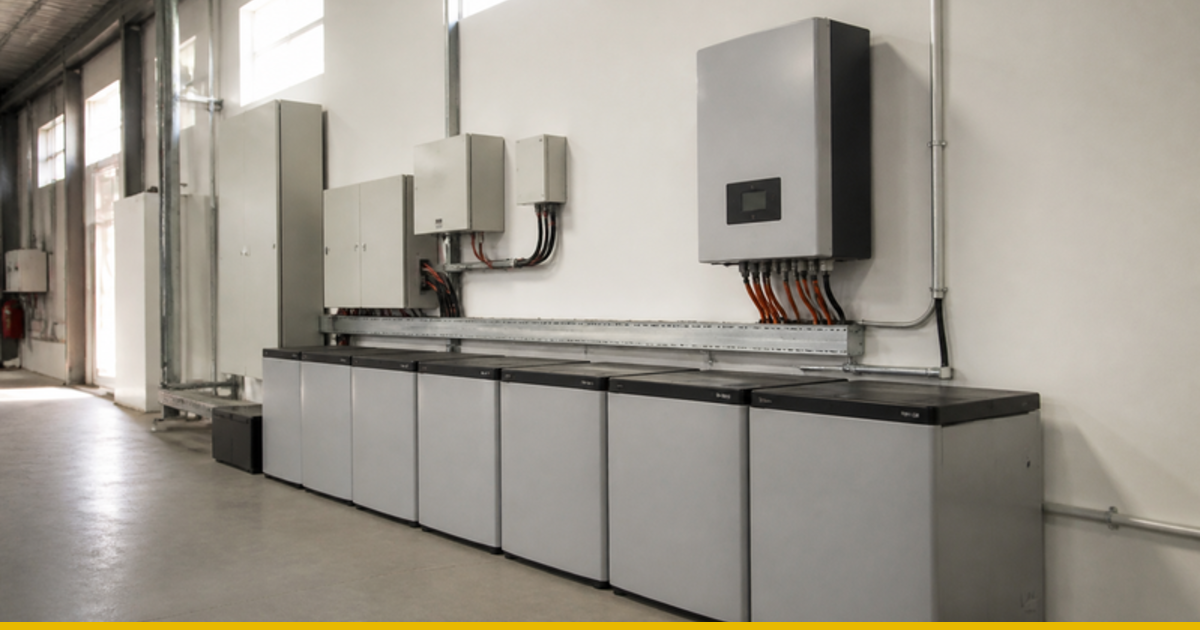
- Add battery only for the night load that's left after you've moved what you can into the day.
Your tariff decides what each saved unit is worth. On Eskom's Ruraflex tariff, winter evening peak units cost far more than daytime ones. Our guide to Ruraflex and Landrate explains the charges solar can and can't cut.
How much battery does a cold room need?
Work it out from what the refrigeration uses overnight. As an illustration, a cold room with a compressor drawing about 8 kW that runs roughly 40% of the time over a 12-hour night uses about 38 kWh. Good insulation, tight doors and afternoon pre-cooling can bring that down a lot, which shrinks the battery.
Many farms find a battery sized to carry the cold rooms through the evening peak and outages, with the grid covering the rest of the night, is the best value. A battery big enough to run everything all night is expensive and is often only fully used in a few weeks of the year.
What about cloudy days and outages?
Cooling can't wait for the weather. Keep the grid connection, or the generator on off-grid sites, as the backstop, and design the system so it starts the generator only when the battery is low. That way solar does most of the work and diesel covers the occasional grey week. For a remote site with no grid connection, read hybrid, grid-tied or off-grid first.
Many farms also pump water for washing, cooling and livestock. A separate solar pump feeding a tank is often cheaper than running pumps from the main system. See solar borehole and irrigation pumps.
Safety First
- Keep food safety first. Agree any change to cold room or milk cooling temperatures with your refrigeration technician and, for milk, your buyer's requirements.
- Use a registered electrical contractor for the solar system, changeover to the generator and any work on the distribution board, with a Certificate of Compliance.
- Protect against lightning. Farm sheds and remote arrays need proper earthing and surge protection.
Frequently Asked Questions
How much battery does a cold room need?
Enough to cover the refrigeration load you can't move into daylight. Measure the overnight use first, then cut it with insulation and pre-cooling. Many farms size the battery for the evening peak and outages and let the grid cover the rest of the night.
Can solar run a milking parlour?
It can run much of it. Afternoon milking falls in good sun, and milk cooling and wash water can be shifted with ice banks, pre-coolers and insulated hot water tanks. Early morning milking usually needs a battery or the grid.
What about cloudy days?
Keep the grid or a generator as the backstop. A good design uses solar first, the battery second, and the grid or generator only when needed.
Where We Fit In
CleanVolts matches farms with vetted, registered CleanVolts Approved installers. Send us your Eskom bills and diesel costs, and an installer can look at when your cooling and processing loads run, then size panels and any battery around them. You contract the installer directly. Using CleanVolts costs you nothing, and if the installer pays us a referral fee, we tell you up front.
Sources: Eskom tariff booklet 2026/27; OurPower, Gauteng solar yield.