Solar maintenance checklist: what to check monthly and yearly

Tony Lopes
Short answer: Each month, check your app for output and alerts. Every six months, look at the panels, inverter area and cables for dirt, damage and pests, from the ground. Once a year, have a professional check connections, protection, battery health and settings. Keep a simple log, and leave anything that means opening covers or climbing on the roof to a registered installer.
Last updated November 2026.
Solar systems are low maintenance, not no maintenance. Most problems start small: a dirty array, a loose connector warming up, a battery setting left over from load shedding, or monitoring that quietly stopped reporting. A few minutes a month catches most of them before they cost money. This is the schedule we recommend, and what a solar service plan covers when you'd rather not do it yourself.
What maintenance does a home solar system need?
Every month (you, five minutes)
- Check the app is still reporting. A monitoring app that stopped updating hides every other fault.
- Compare this month's production with the same month last year. A drop of more than about 10% on similar weather is worth a closer look.
- Look for alerts or error codes on the app or the inverter screen, and note them.
- Check the battery reaches full on a sunny day and isn't draining faster overnight than it used to.
Every six months (you, from the ground)
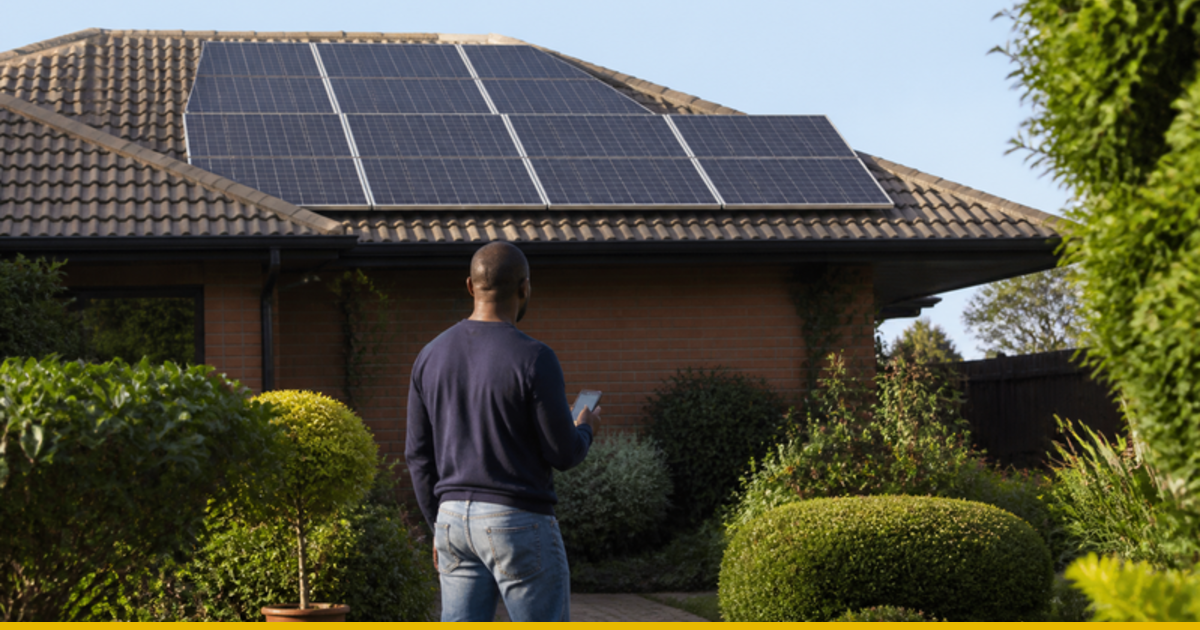
- Look at the panels for dust build-up, bird droppings, leaves or cracked glass.
- Check under the panels for pigeons nesting and for chewed or hanging cables.
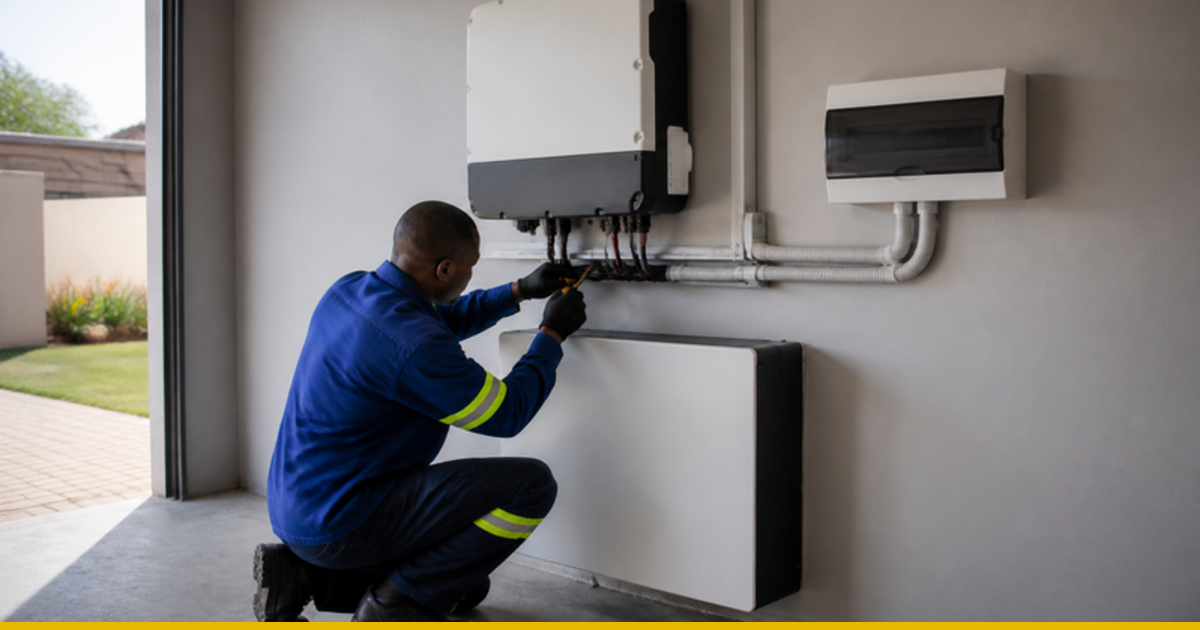
- Look at the inverter and battery area. Keep it clear, dry and ventilated. Look for scorch marks, swelling or a burning smell.
- Check new shade from growing trees or new buildings.
Every year (a registered professional)
- Tightness and condition of DC and AC connections, isolators and breakers.
- Surge protection, earthing and earth leakage protection.
- Battery health, temperature and settings.
- Inverter firmware and settings matched to your tariff.
- Mounting, roof penetrations and panel condition up close.
- Paperwork: CoC, SSEG registration and insurance up to date.
When should panels be cleaned?
In Gauteng, the dry season from about May to September is when dust builds up. Summer rain usually does the job the rest of the year. Dirt and dust typically cost a few percent of yearly output, more where there's mine dust, a busy road or birds. See when to clean your solar panels for timing and method.
Keep a simple log
| Date | Month's production (kWh) | Same month last year | Alerts or notes |
|---|---|---|---|
A year of notes makes any fault easier to diagnose and any warranty claim easier to prove. Our guide to remote monitoring explains what the numbers mean.
Safety First
- Don't open the inverter, battery or isolator covers. Panels produce dangerous DC voltage whenever there's daylight.
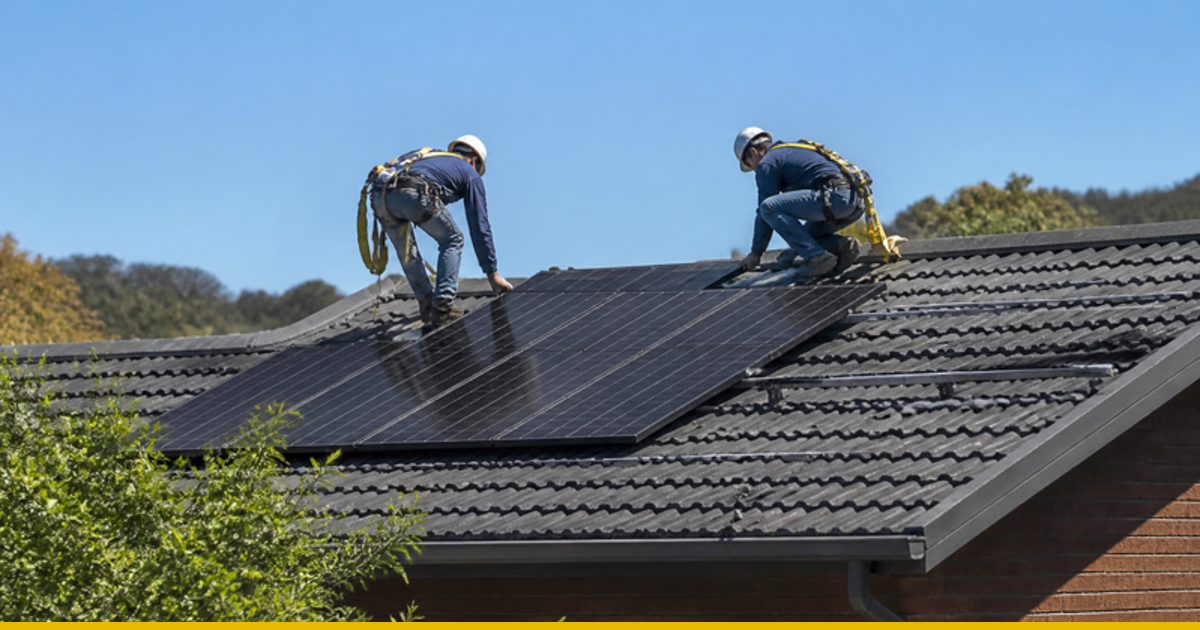
- Don't climb onto the roof to inspect or clean. Falls are the biggest risk in solar maintenance.
- Scorch marks, burning smells or a hot, swollen battery mean switch off at the isolators if it's safe to, and call a professional.
Frequently Asked Questions
Do solar panels need maintenance?
A little. Monthly checks of your app, a look from the ground every six months, occasional cleaning in the dry season and a yearly professional check keep most systems running well.
Who should do solar maintenance?
You can do the app checks and ground-level look yourself. Anything involving covers, connections, the roof or battery settings should be done by a registered installer.
What does maintenance cost?
A yearly service typically costs less than a single month's bill saving on many systems. Our guide to what solar maintenance costs gives current price ranges.
Where We Fit In
CleanVolts service plans cover yearly or six-monthly visits, cleaning and monitoring, carried out by vetted, registered CleanVolts Approved installers, including for systems they didn't install. Any electrical work is done by a registered contractor you contract directly.
Sources: EnergyBee, solar panel cleaning guide, November 2026.