
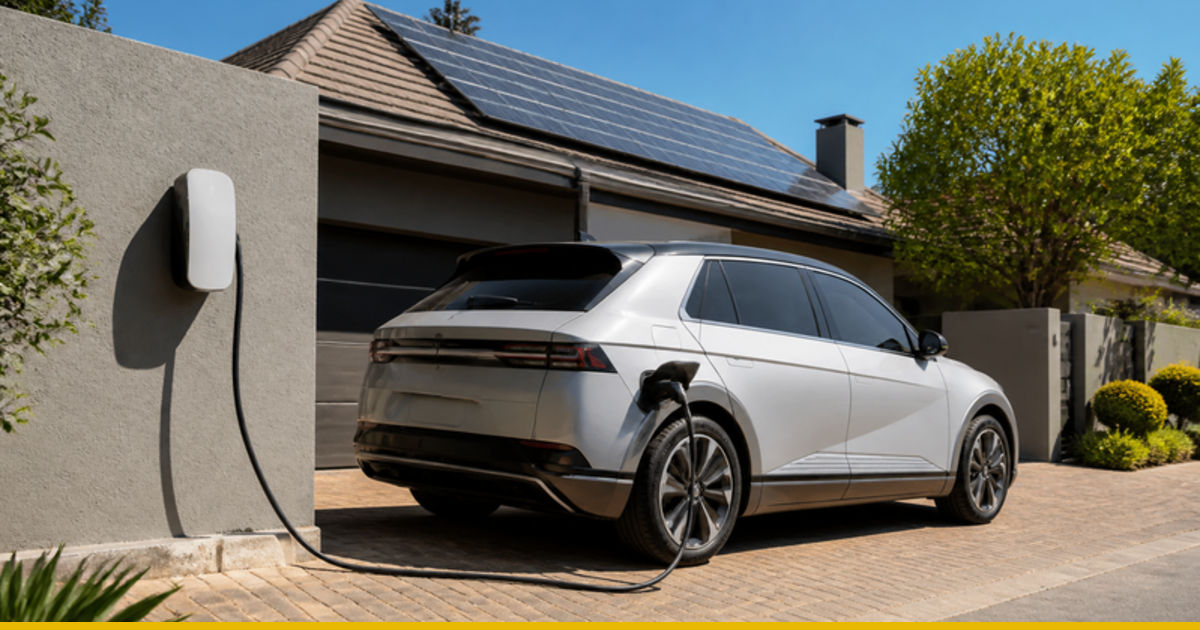
Charging an electric car from home solar in South Africa

Tony Lopes
Short answer: Yes, if your system has spare midday output or is sized for the car. Charging in daylight straight from the panels is the cheapest way to drive. A typical 40 km Joburg commute uses roughly 6 to 8 kWh a day. Charging at night draws on the battery or the grid, which costs more and wears the battery faster.
Last updated November 2026.
Electric cars are arriving in South Africa in growing numbers, and many buyers already have solar. Pairing the two is one of the best reasons to add panels to a solar installation. This guide explains how much energy a car needs and how to charge it sensibly.
Can I charge an electric car from my home solar system?
Yes. The car doesn't know where the electricity comes from; what matters is whether your system has energy to spare when the car is plugged in. Three common setups:
| When you charge | Where the energy comes from | Cost |
|---|---|---|
| Daytime, car at home | Surplus solar | Lowest. Ideal for home workers and second cars. |
| Evening or night | Home battery, then grid | Higher. A large car can empty a home battery in one session. |
| Weekends top-up | Solar on sunny weekend days | Low. Works for commuters who don't drive far. |
How much solar do I need for an EV?
Most EVs use about 0.15 to 0.20 kWh per km. Multiply by your daily distance: 40 km needs about 6 to 8 kWh. In Gauteng, each kW of panels makes roughly 4 to 5 kWh on an average day, so a 40 km commute needs about 1.5 to 2 kW of extra panels if you charge from solar. Your installer will check the inverter has room too. See adding panels or a battery.
Can I charge at night from my battery?
You can, but it's rarely worth it. A 5 to 10 kWh home battery can be emptied by one charging session, leaving nothing for the house. Most owners set the car to charge from solar in the day, or from the grid overnight, and keep the battery for the home.
What does EV charging cost on City Power?
From the grid, about R3.30 to R4.40 per kWh including VAT on the residential prepaid tariff, depending on your monthly block. A 7 kWh daily top-up is roughly R23 to R31 a day from the grid, and close to nothing from surplus solar. Rates change each July; see City Power tariffs for 2026/27.
Do I need a special charger?
Many cars come with a portable charger that plugs into a normal socket and adds roughly 10 to 15 km of range per hour. A wall charger is faster and can be set to follow your solar output. Either way, have a registered electrician check that the circuit can carry the load safely.
Safety First
- Don't use extension cords or adaptors for EV charging. The sustained load can overheat them.
- Any new circuit or charger must be installed by a registered electrician, with a Certificate of Compliance.
Frequently Asked Questions
How much solar do I need for an EV?
About 1.5 to 2 kW of extra panels for a 40 km daily commute, if you charge in daylight.
Can I charge at night from my battery?
Yes, but it can empty a home battery quickly. Daytime solar or overnight grid charging is usually better.
What does EV charging cost on City Power?
About R3.30 to R4.40 per kWh from the grid, so roughly R23 to R31 for a typical daily top-up.
Where We Fit In
Thinking about an EV? CleanVolts matches you with a registered CleanVolts Approved installer who sizes your system with the car in mind. The installer contracts with you directly. Using CleanVolts costs you nothing, and if the installer pays us a referral fee, we tell you up front.