Solar for body corporates and estates: approvals, costs and who pays

Tony Lopes
Short answer: In a sectional title scheme the roof is common property, so solar panels need body corporate approval. Most legal commentators treat solar as a reasonably necessary improvement: the trustees give all owners at least 30 days' written notice, and if nobody objects it can go ahead; if owners object, it needs a special resolution. A scheme-wide system can cut the common-property bill, while owners who want their own panels need written consent and clear conditions.
Last updated November 2026. This guide is general information, not legal advice. Your scheme's own rules may add requirements.
Trustees, managing agents and owners in complexes all ask the same questions: who has to approve solar, who pays, who insures it and what happens when the roof needs fixing. This guide covers sectional title schemes under the Sectional Titles Schemes Management Act (STSMA) and its Prescribed Management Rules, and freehold estates run by a homeowners' association.
Who owns the roof in a sectional title scheme?
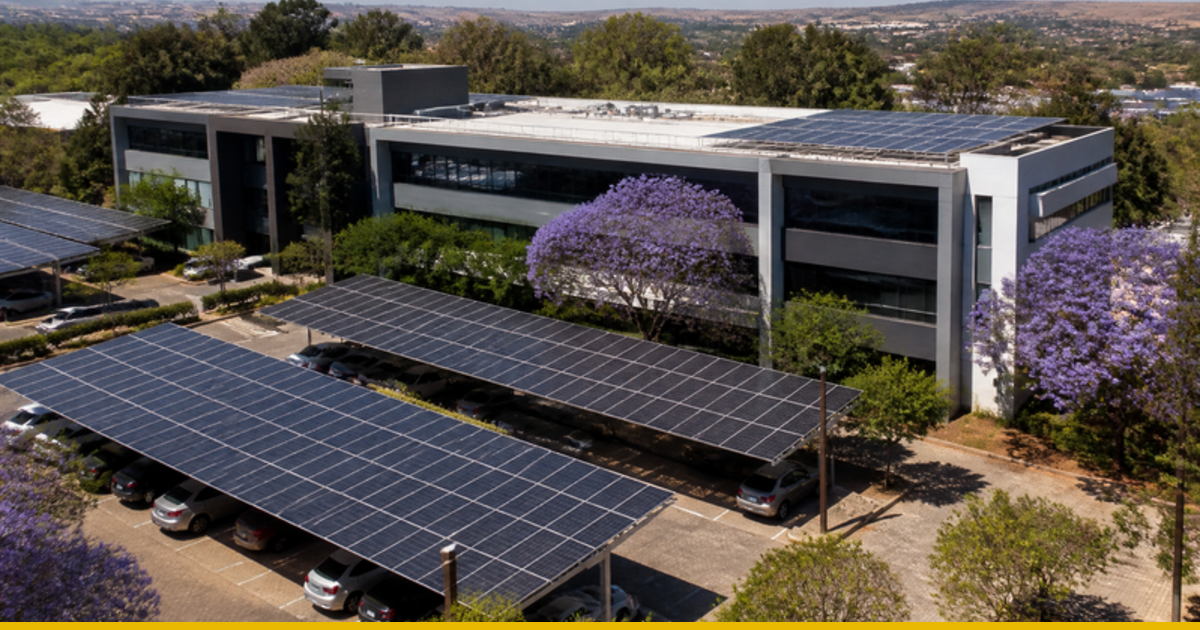
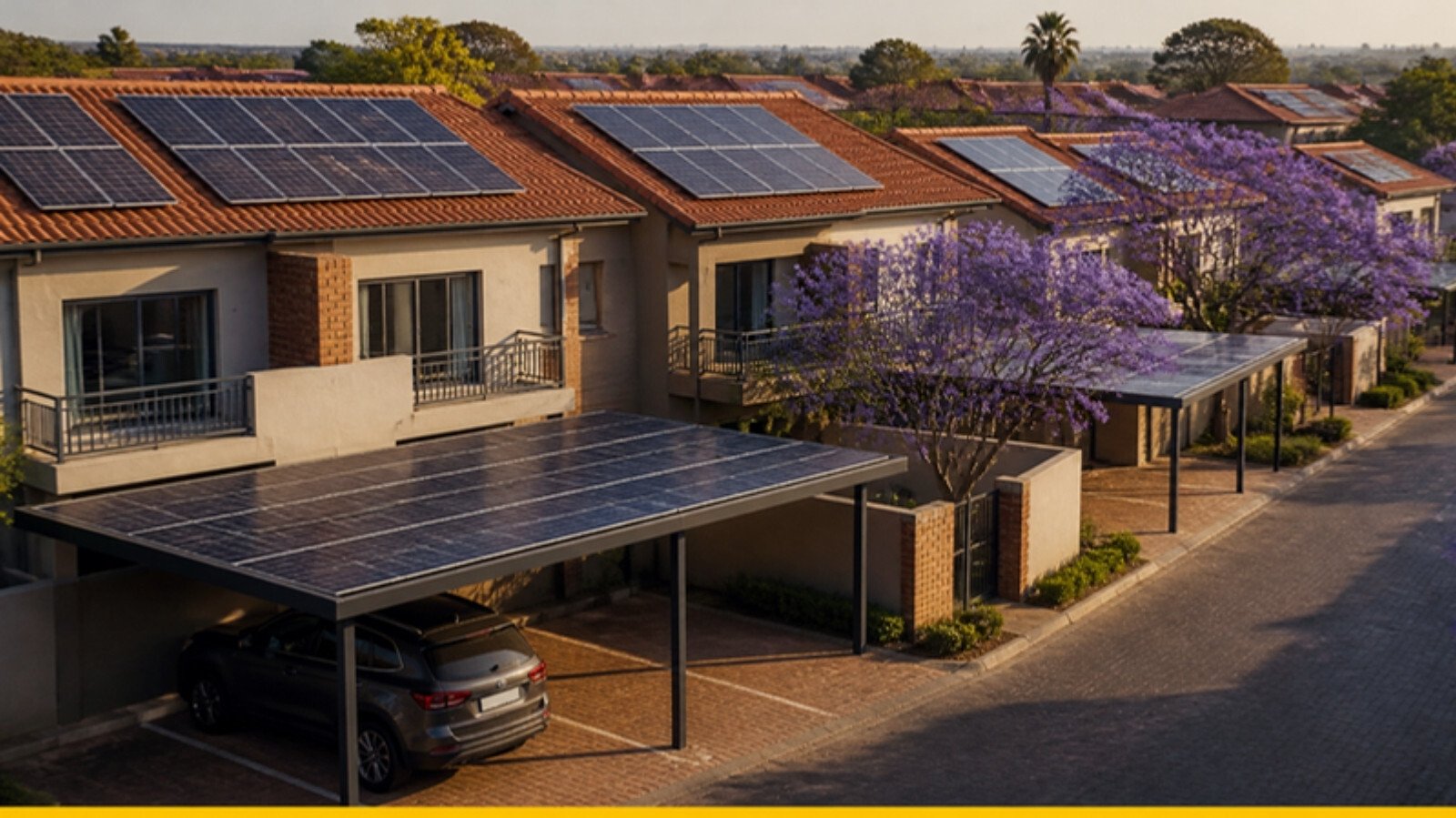
All the owners do, together. The roof, outside walls, carports and gardens are normally common property, owned jointly through the body corporate, unless the sectional plan or rules give someone an exclusive use area. That is why no owner can put panels on the roof alone, even above their own unit.
What kind of project is it?
| Project | Who owns it | What it powers | Approval |
|---|---|---|---|
| Scheme-wide system | The body corporate | Common-property loads: gate motors, lifts, pumps, security lighting, pool, clubhouse | Body corporate improvement process (see below) |
| Owner's own system on common property | The owner | That owner's unit | Written consent and conditions from the body corporate |
| Owner's system in an exclusive use area | The owner | That owner's unit | Usually simpler, but trustees can still set reasonable conditions |
| Inverter and battery only, inside a unit | The owner | Backup for that unit | Often no resolution needed, but a CoC is still required |
How does the body corporate approve a scheme-wide system?
Prescribed Management Rule 29 sets out two routes for improving common property:
- Reasonably necessary improvements. The body corporate must give every owner at least 30 days' written notice before going ahead. The notice must set out the estimated cost, how the body corporate will pay for it, and why the improvement is needed. If owners object and call for a meeting, the improvement needs a special resolution, which means at least 75% of the votes of members present or represented at a general meeting, or written agreement from members holding 75% of the votes.
- Improvements that are not reasonably necessary. These need a unanimous resolution, which is much harder to get.
Most sectional title lawyers who have written on the subject argue that solar and battery systems are reasonably necessary, given rising tariffs and grid reliability. Write the motivation in the notice with that in mind: show the expected saving on the common-property electricity bill and the benefit for security and access when the power fails.
What should an owner do to install their own panels?
- Read the conduct rules and sectional plan. Some schemes already have a solar policy.
- Send the trustees a written proposal with the installer's details, the number of panels, where they will be mounted, drawings of any changes to common property, and where the inverter and battery will go.
- Agree the conditions in writing: who pays for installation and maintenance, who removes and refits panels when the roof needs repairs, who insures them, and who is liable for leaks or damage.
- Use a registered installer and give the trustees a copy of the Certificate of Compliance when the work is done.
Trustees must act reasonably and can't simply refuse a sound proposal, but they can attach fair conditions. Disputes can go to the Community Schemes Ombud Service (CSOS).
How can a body corporate pay for a scheme-wide system?
| Option | Upfront cost | Worth knowing |
|---|---|---|
| Reserve fund | From existing savings | No new levy, but check what else the fund needs to cover. |
| Special levy | Owners pay a once-off amount | Needs good communication; owners see the saving on future levies. |
| Loan | Repaid from levies | The saving on the electricity bill can cover much of the repayment. |
| Rental or power purchase agreement (PPA) | None | A provider owns and maintains the system; the scheme pays a monthly fee or a rate per unit. See solar PPA vs buying. |
Who insures the panels?
Tell the body corporate's insurer about any system on common property before it is switched on. For a scheme-wide system, it is normally added to the building policy. For an owner's own panels, agree in writing who insures them, because the building policy may not cover equipment that belongs to one owner. Our guide to insurance and solar covers the common gaps.
What about metering and supplying power to units?
Using a scheme-wide system for common-property loads is straightforward. Supplying solar power to individual units and recovering the cost raises metering, billing and municipal approval questions. Involve the managing agent and your municipality early if you want to go that route.
How is it different in a freehold estate?
In a freehold estate each owner owns their roof, so the STSMA doesn't apply. But the homeowners' association constitution and architectural guidelines usually control what can be seen from outside: where panels go, frame colour, and where inverters and batteries are mounted. Submit plans to the aesthetics or architectural committee before the installer starts.
What else should trustees check before going ahead?
- Roof condition: fix or replace worn roofing before panels go on, not after.
- Structure: a structural check for large arrays or older roofs.
- Battery location: a ventilated, non-combustible space away from escape routes and shared walkways.
- Registration: grid-connected systems must be approved by the municipality before they are switched on. See SSEG registration in Johannesburg.
- Comparable quotes: ask every installer to quote on the same loads and the same scope. See what a solar quote should contain.
Frequently Asked Questions
Can the body corporate refuse my solar panels?
It can't refuse unreasonably, but it can attach reasonable conditions about placement, appearance, insurance and roof repairs. If you believe a refusal is unreasonable, CSOS handles sectional title disputes.
Who pays if panels cause a roof leak?
Whoever the written agreement says. For an owner's system that is usually the owner. Agree it before installation.
Can a tenant install solar in a complex?
Only with the owner's written permission, and the owner then follows the same body corporate approval process.
Where We Fit In
CleanVolts helps trustees, managing agents and owners pull together the information installers need, and matches schemes with registered CleanVolts Approved installers. The installer contracts with the body corporate or owner directly. Using CleanVolts costs you nothing, and if the installer pays us a referral fee, we tell you up front.
Sources: BusinessTech on solar in complexes; Engineering News on legal compliance in community schemes; Property Professional on body corporate approvals; STBB notes on Prescribed Management Rule 29; Spire on following the right process.