Surge and earth leakage protection for solar

Tony Lopes
Short answer: Yes. Johannesburg sees an average of 15 to 20 lightning flashes per square kilometre a year, and the long cables from your roof to your inverter pick up surges from nearby strikes. A proper installation has surge protection on the DC and AC sides, sound earthing and bonding, and working earth leakage protection. Missing or worn-out protection is a common gap on older systems.
Rules checked October 2026.
Summer storms on the Highveld bring lightning almost every week. Your inverter, battery and the electronics in your house all sit on the same wiring as a set of panels that spend their lives on the highest point of the roof. This guide explains the three kinds of protection a solar system needs, where each one should sit, the safe checks you can do yourself, and what to do if yours is missing. If something is already damaged, our solar repairs page explains how we get it fixed.
Safety First
- Don't open the DB board, the inverter or any combiner box. Solar systems have DC circuits that stay live in daylight even when the inverter is off.
- Don't touch panels, cables or the inverter during a storm.
- If you smell burning, see scorch marks or a device is hot to the touch after a storm, switch nothing back on. Get a registered electrical contractor to look at it.
Why does a solar system need surge protection?
The Johannesburg Lightning Research Laboratory at Wits records an average of 15 to 20 lightning flashes per square kilometre a year, which it describes as high for a major city. Most damage doesn't come from a direct hit on your roof. It comes from strikes nearby, which induce a voltage spike in any long run of cable.
A solar system adds exactly that: cables running from the panels across the roof, down the wall and into the inverter. Those cables act like an aerial for surges. Surges can also come in from the grid side, from lightning on overhead lines or from switching on the network.
Good-practice guidelines for South African PV installations use a simple test: compare the length of your DC cabling with a "critical length" worked out from local lightning density. Where the cable is longer, a DC surge protection device (SPD) is needed. At Gauteng lightning levels, most rooftop systems on houses are over that length.
The inverter is usually the most expensive single part of the system after the battery, and its electronics are sensitive. A surge protection device costs a small fraction of that.
What is the difference between surge protection, earthing and earth leakage?
These three get mixed up, but they do different jobs. You need all of them.
| Protection | What it protects against | What it looks like |
|---|---|---|
| Surge protection device (SPD) | Short voltage spikes from lightning or the grid. It diverts the spike to earth before it reaches your equipment. | A module in the DB board or a combiner box, usually marked SPD, often with a small indicator window. |
| Earthing and bonding | Gives fault and surge currents a safe path to ground, and keeps metal parts such as panel frames and mounting rails at a safe voltage. | Green and yellow earth cables connecting the panel frames, rails, inverter and DB board to the house earth. |
| Earth leakage protection | Electric shock. It cuts the power when current leaks to earth, for example through a person, a damaged cable or a wet appliance. | A switch in the DB board with a "test" button, usually rated at 30 mA. |
An SPD only works if it has a good earth to send the surge to. That's why earthing problems and surge damage so often turn up together.
Where should the protection sit?
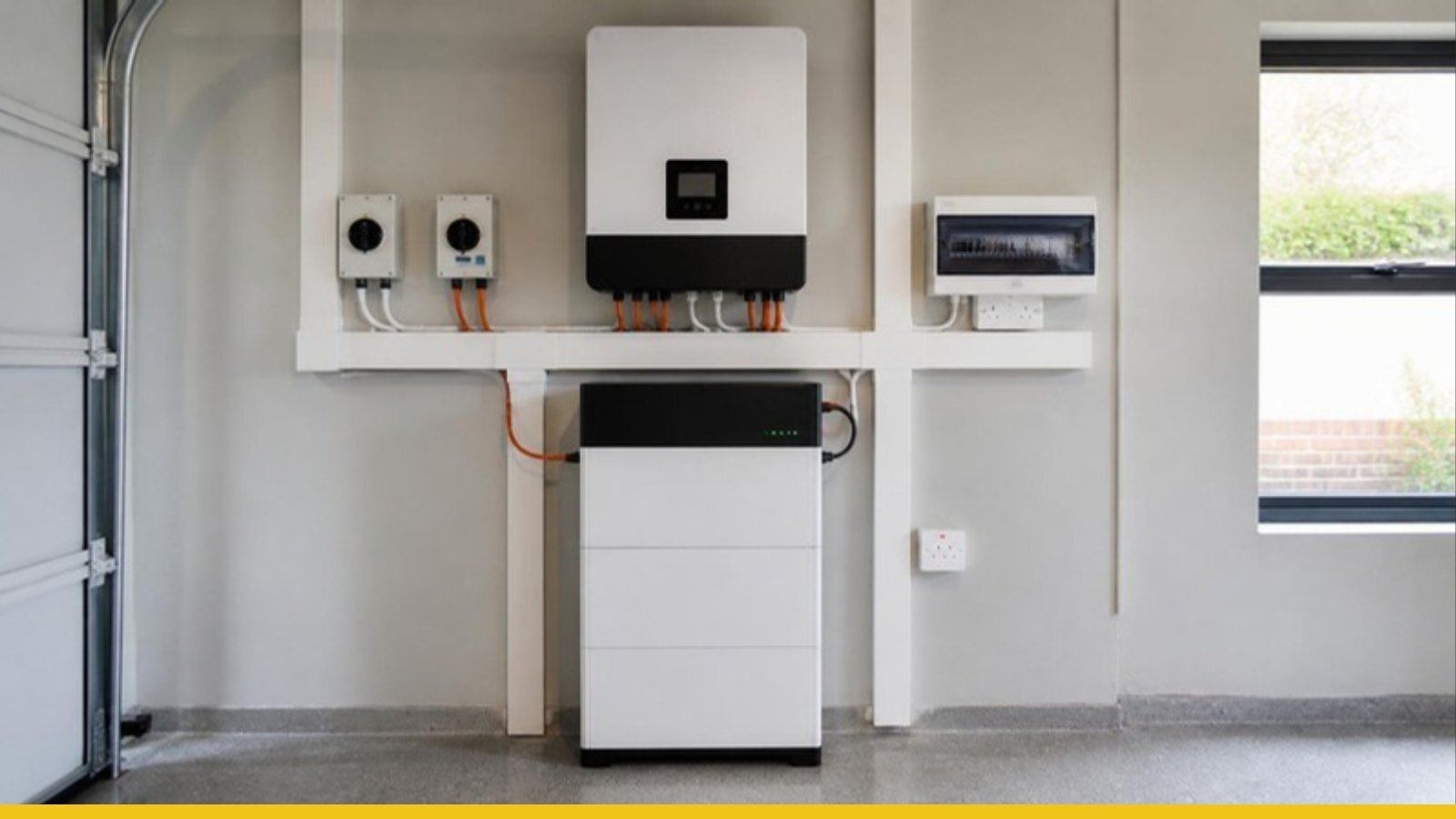
The exact layout depends on the system, the cable lengths and the inverter manufacturer's instructions. On a typical hybrid home system, you'd expect to find protection in these places:
| Location | What should be there |
|---|---|
| On the roof | Panel frames and mounting rails bonded to earth. A DC SPD near the array as well, if the cable run to the inverter is long. |
| DC side, next to the inverter | A DC isolator and a DC SPD rated for solar, in a box or board kept separate from the AC side. |
| AC side of the inverter | An AC SPD, and the breakers and earth leakage protection the inverter manual specifies. |
| Backup (essential) circuits | Their own earth leakage protection, which must still work when the grid is down and the inverter is running the house on its own. |
| Main DB board | An SPD where the grid supply comes in, earth leakage protection, and the main earth connection. |
DC and AC SPDs aren't interchangeable. A DC SPD for solar has to be rated for the DC voltage of your panel strings. An AC device in its place won't protect the inverter and can fail dangerously.
Does my inverter already have surge protection built in?
Many hybrid inverters include some built-in surge protection. The level varies by model, and it's there to protect the inverter from smaller surges, not to replace external protection. Your inverter manual says what's built in and what the manufacturer expects the installer to add.
External SPDs have one big advantage: they're designed to be replaced. When a module absorbs a large surge, it sacrifices itself and you swap the cartridge. When internal protection fails, the inverter usually has to go in for repair.
What does earth leakage protection do on a solar system?
Earth leakage protection trips when it detects current going to earth that shouldn't be. Units rated at 30 mA are there to protect people, because currents above that level can stop a heart.
Solar adds two complications:
- The type of device matters. Some inverters can produce leakage currents that an ordinary earth leakage unit doesn't detect properly. The inverter manual states which type of device to use on its output.
- Backup circuits need protecting when the grid is off. When a hybrid inverter runs the house during an outage, the earth leakage protection on the backup side and the neutral-to-earth connection have to be set up so they still work. On some older installations, the backed-up circuits lose earth leakage protection as soon as the grid goes down.
If your earth leakage trips often since solar went in, read our guide to why an inverter keeps tripping. Nuisance trips can point to leakage in old wiring, damp connections or a faulty appliance.
Which standards apply?
Solar installations in South Africa fall under the Electrical Installation Regulations and the wiring code, SANS 10142-1, with SANS 60364-7-712 covering the extra requirements for solar PV. A separate solar part of the wiring code, SANS 10142-1-2, was published in 2021 but later withdrawn, and its content is being folded into SANS 10142-1. If an installer quotes that part to you, ask which edition of the wiring code they're working to.
A registered person has to inspect and test the installation and issue a Certificate of Compliance (CoC) covering the solar work. Our guide to what a CoC does and doesn't mean explains its limits: it confirms the installation was safe on the day it was tested, not that a surge device is still working three storm seasons later.
How can I check my own system?
These checks are look-don't-touch. Open only the clear cover of the DB board, never the panel behind it.
- Find the solar boards. Most systems have a DC box or board near the inverter, and an AC board for the inverter output and backup circuits.
- Look for SPD modules on both the DC and AC side. They're usually labelled SPD or show a surge symbol. If you can only find one, or none, make a note.
- Check the indicator windows. Many SPDs have a small window that shows green when working and red when the cartridge needs replacing. Check your SPD's label for what its colours mean.
- Press the test button on each earth leakage unit. It should trip straight away. Do this on the main board and on the backup board. Warn the household first, and switch it back on afterwards.
- Look for labels. Solar boards should be labelled, including warnings that DC circuits stay live in daylight.
- Check your paperwork. Your CoC should cover the solar installation. If there isn't one, see our guide on what to do when there's no CoC.
- Check the app after storms. Look at the alarm history for faults recorded during or after a storm, and compare output with a similar clear day before it.
For a wider set of checks, see was your solar installed properly?
What gaps turn up most often?
- No DC surge protection at all, or AC protection only
- SPDs that tripped in a past storm and were never replaced
- Panel frames and mounting rails not bonded to earth
- An SPD installed with a long, looping earth wire, which makes it far less effective
- Backup circuits with no earth leakage protection when running off the inverter
- Earth leakage units that don't trip when tested
- No CoC, or a CoC from before the solar was added
Most of these are quick, low-cost fixes once someone knows they're there. If you're not sure what you have, a Solar Health Check will tell you.
What should I do after a lightning storm?
- Check the inverter display or app for alarms and confirm the system is producing normally.
- Check the SPD indicator windows. A red window means that device did its job and now needs replacing before the next storm.
- If something has failed, photograph it and note the date and time of the storm for your insurer.
- Don't keep resetting equipment that trips. Get it tested.
Storms that bring lightning often bring hail too. Our guide to hail damage on solar panels covers what to check on the roof.
Frequently Asked Questions
What does a surge protector do on solar?
It detects a sudden voltage spike, such as one induced by nearby lightning, and diverts it to earth before it reaches the inverter and other equipment. A solar system needs one on the DC side for the panel cables and one on the AC side for the grid and house wiring.
Does insurance cover lightning damage to solar?
Many South African home policies cover lightning and power surge damage, but often with a separate limit, and only if your insurer knows about the solar system. Insurers may ask for the CoC and a report on the cause, so check your policy wording and speak to your broker before storm season.
Can surge protection be added later?
Yes. SPDs can be added to an existing system, usually in the DC box near the inverter and in the AC board. The work should be done by a registered electrical contractor, who checks the earthing at the same time and updates the CoC.
Where We Fit In
A Solar Health Check looks at your system's surge protection, earthing and earth leakage, along with its settings, alarm history and paperwork, and tells you what's missing and what it will take to fix.
Where we find work that needs doing, a registered electrical contractor you contract directly does it and issues the CoC in their own name. We scope it, coordinate it and check it's done.
We work across Blairgowrie, Linden, Randburg, Ferndale, Northcliff, Fairland, Emmarentia, Greenside, Parkhurst and the suburbs around them.
Book a Health Check, or start with our free checklist, "Is your solar system legal and safe?".
Sources: Johannesburg Lightning Research Laboratory, Wits; ECA(SA) on the withdrawal of SANS 10142-1-2; Interim guidelines: good practice for solar PV installations in South Africa.